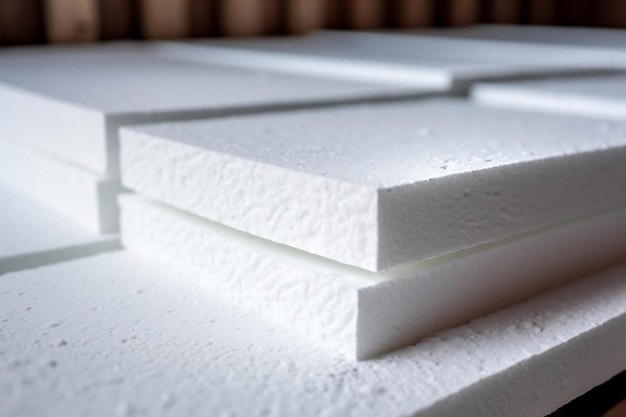
Ceiling Unolite or Plastofoam is a type of lightweight block that is widely used in the construction industry. These blocks are produced from expanded polystyrene (E.P.S.) and are considered a suitable alternative to clay and cement blocks in block and chromite roofs due to their special features such as lightness, thermal and acoustic insulation. Ceiling Unolite has received much attention in construction projects due to its reduced weight of the structure, increased speed of execution and reduced costs.
Lightweight: Unolit Roofing is very light and its weight is reduced by about 90% compared to cement and clay blocks.
Thermal and acoustic insulation: These blocks have good resistance to heat and sound transmission, which reduces energy costs and creates a quieter environment.
Moisture resistance: Unolit Roofing has high resistance to water and moisture and prevents the growth of bacteria and fungi.
Earthquake stability: Due to the reduction of the dead load of the building, these blocks are more resistant to earthquakes and the risks of falling materials are reduced.
Applications:
Beam block ceilings: Unolit Roofing is used in the construction of beam block and chromite ceilings as a concrete formwork.
Thermal and acoustic insulation: It is used as an effective insulation in buildings to prevent energy loss and reduce noise pollution.
Reducing the weight of the structure: In construction projects, especially in the construction of roofs, the use of roof unolith helps reduce the weight of the building.
Advantages of using roof unolith:
Reducing the weight of the structure: Due to their low weight, these blocks exert less pressure on the foundation and the risk of material falling during an earthquake is minimized.
High speed of implementation: Easy and quick installation of the blocks reduces the time of construction projects.
Energy saving: Roof unolith, as a thermal insulator, reduces energy consumption for cooling and heating.
Cost reduction: Due to its lightness and ease of installation, overall construction costs are reduced.
Disadvantages of using roof unolith:
Low fire resistance: Roof unolith usually does not have high fire resistance and can quickly catch fire if ignited.
Unstable resistance to insects: These blocks are temporarily resistant to insect penetration, but in some conditions this property may decrease.
Low resistance to some chemicals: Roofing Unolite is not resistant to chemicals such as gasoline, alcohol and ethanol.
Specifications of Roofing Unolite Blocks:
Product dimensions of Roofing Unolite:
Block width: from 50 to 70 cm
Block length: from 1 to 2 m
Block height: from 20 to 35 cm
Weight: from 1200 g to 1500 g
Product advantages:
Due to the optimal dimensions of the blocks, the need for beams is reduced and, as a result, the consumption of materials is significantly saved.
Lightweight polystyrene blocks help reduce the costs of the foundation and skeleton, and this reduction in costs can be seen by up to 25%.
Using a 2.5 kg polystyrene block, ten 120 kg cement blocks can be easily replaced, which will reduce the total weight of the roof.
The installation process of the blocks is quick and simple, which reduces waste and scrap during construction.
Due to the lightness of the blocks, the risks of falling materials during an earthquake are significantly reduced.
Polystyrene blocks act as an excellent insulator against heat, cold, moisture and sound, which reduces energy loss in the building by up to 70%.
Storage and maintenance conditions for Unolith roof:
It should be kept away from flammable materials such as oil paint and gasoline.
Store in a space away from welding sparks.
It is mandatory to have at least one fire extinguisher in the storage space.