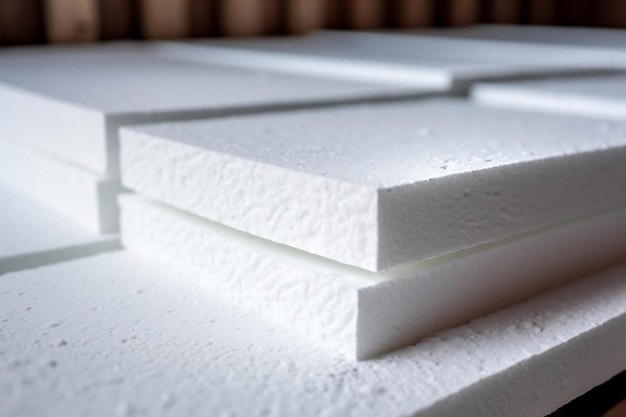
Polystyrene insulation (Unolite) is one of the most widely used materials in the construction industry. Due to its special characteristics, it is used in many projects to improve energy efficiency and create more comfortable conditions for building occupants.
These insulators are specially designed to prevent heat transfer and are therefore used in insulating walls, ceilings and floors. The cellular structure of polystyrene makes these insulators very effective in preventing energy loss and helping to reduce energy consumption. Also, the very light weight of these insulators reduces the pressure of the building on the foundation and makes their installation easy and fast.
Polystyrene sheets are produced in different thicknesses, which allows them to be used in different parts of the building. For insulating interior and exterior walls, these sheets can be easily installed, and on the exterior of the building, various coatings such as stone, brick, cement composite or paint are used on these insulators to prevent environmental effects such as humidity and sunlight. In ceilings and roofs, especially in buildings with sloping roofs, these insulators are used to prevent energy loss and increase the life of the building.
Other important features of polystyrene include its high resistance to moisture and pressure. These features make these insulators work well in humid conditions or in areas where high pressure is applied to ceilings and floors. For parts of the building that need to withstand pressure, polystyrene with a higher density (20 to 25 kg / cubic meter) is used. On the other hand, polystyrene, as an effective thermal insulator, helps reduce the need for heating and cooling systems and saves energy.
Due to all these features, the use of polystyrene in the construction industry is rapidly increasing, and engineers and architects are using it to improve the efficiency of buildings, reduce energy costs and increase the speed of project implementation. These insulators are especially excellent for reducing construction costs and increasing the useful life of buildings.